Reduce Pregnancy Back Pain: Ergonomic Chair Adjustments That Work
By Anika Sethi • 20th Nov
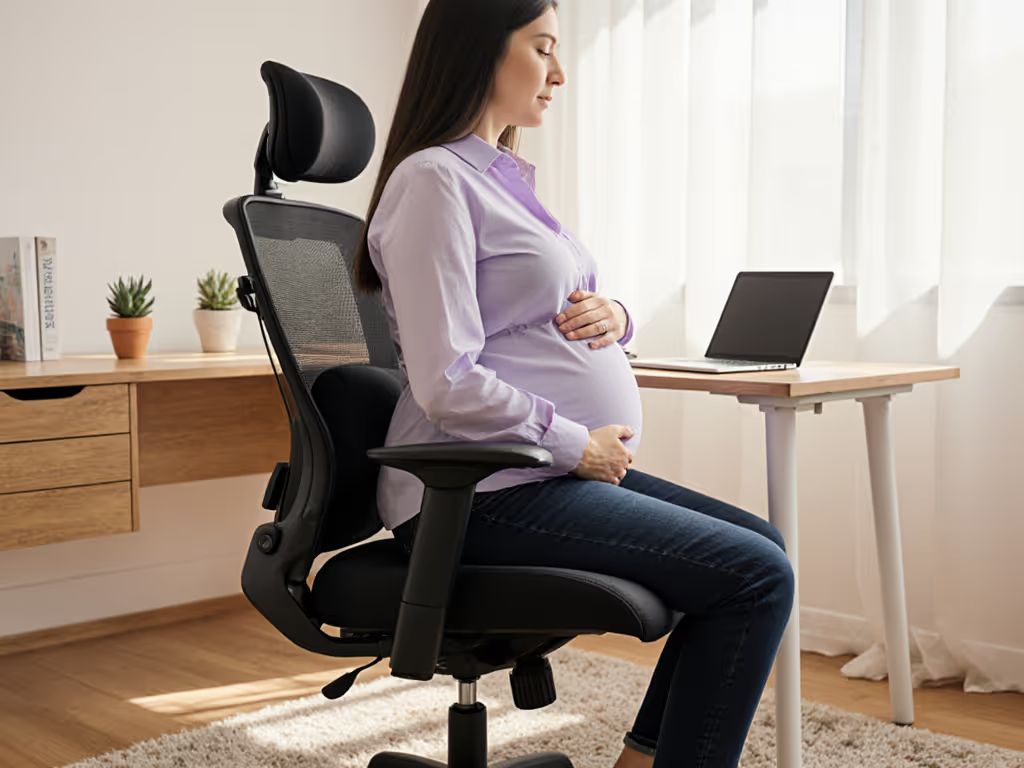
As an expectant mother navigating remote work, finding the right ergonomic chair can transform your daily comfort and energy levels. For those creating a supportive maternity office seating arrangement, strategic adjustments matter more than buying new gear. If you're new to fine-tuning chair controls, see our step-by-step ergonomic chair setup guide. Over the years, I've helped countless knowledge workers (developers, designers, and healthcare administrators) reclaim comfort during pregnancy through evidence-based chair tweaks that honor the body's need for movement.
Why Standard Advice Falls Short for Pregnancy
Pregnancy reshapes your biomechanics faster than most ergonomic guidelines acknowledge. That "perfect posture" you've been told to maintain? It's neither achievable nor desirable as your center of gravity shifts. Bodies thrive on variability; the best pregnancy back support comes from chairs that invite subtle position changes throughout your workday, not rigid enforcement of static alignment.
Expectant mothers in tech roles often arrive at my virtual desk frustrated after trying generic "sit straighter" advice that only increased their lower back strain. One developer I worked with had resorted to standing all day until we realized her real issue wasn't posture, it was seat depth and lumbar resistance working against her natural movement patterns.
Movement is medicine; chairs should enable it, not restrain it.
Step-by-Step Adjustments for Prenatal Workplace Comfort
Step 1: Reconfigure Your Seat Depth
Why it matters: As your belly grows, standard seat depths force you to scoot forward, collapsing your lumbar curve and straining pelvic ligaments.
How to adjust:
- Slide your seat out until your lower back touches the chair's backrest without your knees pressing against the front edge
- If your chair lacks adjustable depth (common in budget models), place a folded towel behind your sacrum to create gentle forward tilt
- Ideal clearance: 2 to 3 fingers' width between seat edge and back of knees
This simple change immediately redistributes weight off your tailbone (a frequent pain point during pregnancy that many mistake for general "back pain").
Step 2: Soften Lumbar Support
Why it matters: Pregnancy hormones soften ligaments, making standard lumbar rolls painful pressure points rather than supports.
How to adjust:
- Reduce lumbar firmness by 30 to 50% from your pre-pregnancy setting
- If your chair lacks adjustable lumbar, roll a small towel lengthwise and place it lower on your back (at belt-line height)
- Check alignment: Your spine should feel supported but not compressed, like a gentle hand guiding your posture
Many expectant mothers overcorrect by removing lumbar support entirely, which creates new instability. For a deeper dive into maintaining your spine's natural curve, read our lumbar support guide. The goal is responsive support that yields to your movements, not rigid resistance.
Step 3: Activate Your Recline Mechanism
Why it matters: Upright sitting increases pressure on your growing uterus by 30 to 50% compared to 110-degree recline (per biomechanics research from the University of Waterloo).
How to adjust:
- Set recline tension to its lowest setting so even gentle movement engages the mechanism
- Work primarily between 100 and 115 degrees of recline (use your smartphone's level app for precision)
- Place a small pillow under your ribcage if reclining causes shoulder strain
This creates what I call "rhythmic recline," a micro-movement habit where typing naturally rocks you slightly forward while reading reclines you back. For evidence on disc pressure at different angles, see our optimal recline angles guide. This continuous movement improves circulation without breaking workflow.
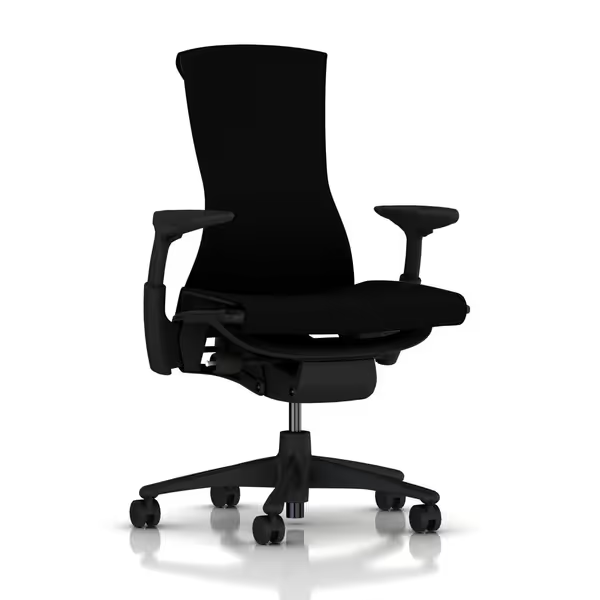
Herman Miller Embody Ergonomic Office Chair
Dynamic ergonomic support for pain-free, extended sitting.
$1849
Ergonomic Design20+ physicians and PhDs contributed expertise.
Ergonomic Design20+ physicians and PhDs contributed expertise.
Pros
Distributes pressure, promotes natural alignment.
Adapts to movement, maintaining constant support.
Cons
High price point.
I can work many hours without discomfort, providing complete pain relief.
I can work many hours without discomfort, providing complete pain relief.
Step 4: Modify Armrest Positioning
Why it matters: Elevated shoulders from high armrests strain neck muscles already compensating for forward head position during pregnancy.
How to adjust:
- Lower armrests until elbows rest at or slightly below desk height
- Angle them outward to match your widened stance
- Set armrest width to accommodate your current hip width (measured while seated)
For those using chairs like the Steelcase Leap with 4D arms, this is where precise adjustment shines, allowing arms to move with your shifting torso without losing support. Compare options in our 4D vs 3D armrest guide to reduce typing-related shoulder strain.
Creating Movement Habits That Support Your Body
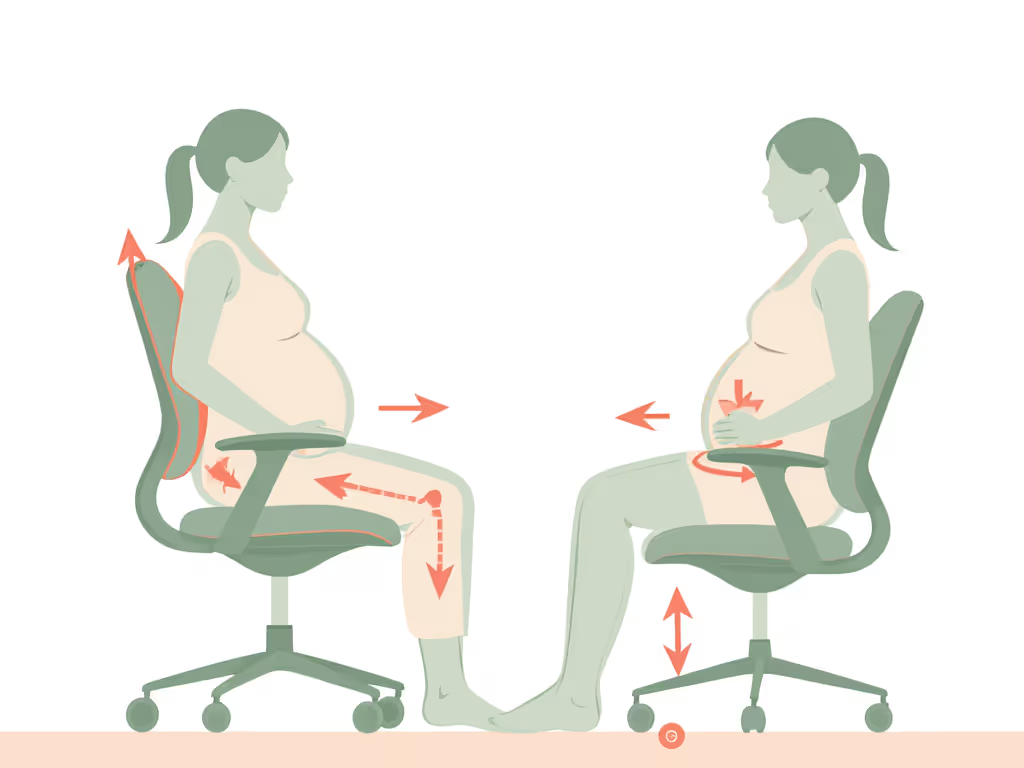
Merely adjusting your chair isn't enough, you need routines that leverage those adjustments. For daylong movement strategies that pair with these adjustments, explore our dynamic sitting techniques. Forget hourly "stand up" reminders that disrupt focus. Instead, build these into your workflow:
- The breath reset: Every time you finish a sentence while typing, take a deep inhale while reclining slightly, then exhale while returning to upright
- The task pivot: Rotate your chair 15 degrees left when switching between email and creative work (this engages different spinal muscles), and right for meetings
- The foot float: While on calls, lift heels slightly off the floor for 10 seconds every minute to activate calf muscles and improve circulation
These micro-movements create what I call "dynamic neutral," a state where you're neutral where needed, mobile where beneficial. This approach prevents the stiffness that plagues so many expectant mothers working long hours.
Sustaining Comfort Through Each Trimester
Your needs will evolve, so build in monthly adjustment checkpoints:
| Trimester | Key Adjustment Focus | Quick Check |
|---|---|---|
| First | Preventing premature rounding | Can you sit with hands in lap without sliding forward? |
| Second | Accommodating shifting center of gravity | Does reclining relieve rib pressure? |
| Third | Reducing pelvic strain | Can you stand up without bracing hands on armrests? |
Remember that maternity chair adjustments aren't about achieving perfection; they are about creating options. The most effective expectant mother office setup provides multiple comfortable positions rather than one "ideal" posture.
Final Thoughts for Your Comfort Journey
Pregnancy transforms your relationship with seating, but it shouldn't mean sacrificing productivity or comfort. By understanding your chair's adjustability as movement enablers, not static posture fixers, you can design a workspace that supports both your changing body and your professional goals. When your ergonomic chair invites gentle motion instead of resisting it, you'll notice improvements beyond pain reduction: better focus, sustained energy, and ultimately, the confidence that your workspace grows with you.
Take the next step by downloading our free Prenatal Movement Tracker, a simple tool to build your personalized rhythm of micro-adjustments throughout the workday. Your most comfortable trimester awaits, one subtle shift at a time.
Related Articles