Office Chair Fabrics and Skin Health: A Dermatology Perspective
By Anika Sethi • 12th Apr
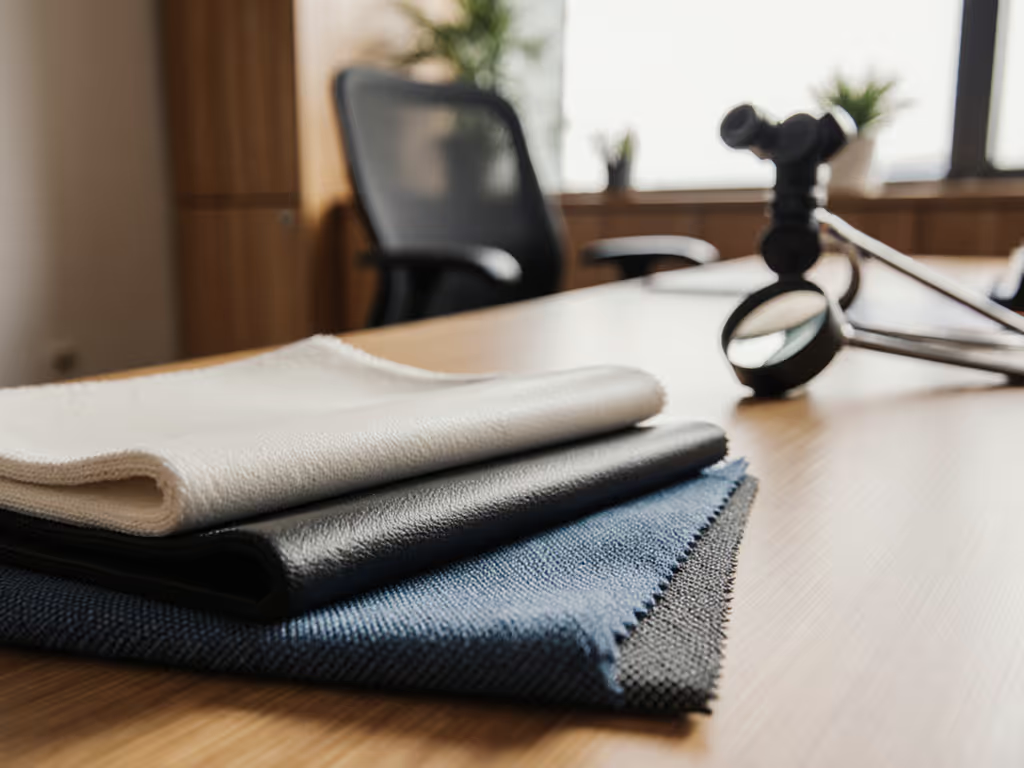
Choosing the right ergonomic chair materials extends far beyond comfort and durability. It directly impacts your skin health during extended work sessions. When you spend six to ten hours daily seated, the interface between your body and the chair becomes a dermatological consideration, one that is rarely addressed through the lens of both office chair dermatology and biomechanical science. This article synthesizes evidence from materials science and skin physiology to help you understand how fabric choice influences moisture regulation, irritation risk, and long-term skin integrity.
Why Fabric Choice Matters for Skin Health
The Moisture-Microclimate Problem
Your skin is a dynamic organ that regulates temperature and moisture through perspiration. When seated for prolonged periods, the chair's surface becomes a microclimate, one where heat and sweat accumulate if the material cannot breathe effectively. Skin breathability while sitting is not a luxury; it's a physiological necessity. For a side-by-side look at airflow and heat control across materials, see our mesh vs padded chairs comparison.
Fabrics vary dramatically in their ability to manage this microclimate. Polyester-dominant blends, while durable, often trap moisture close to the skin, creating an environment where friction increases and bacterial growth accelerates. Conversely, materials engineered for moisture-wicking chair fabrics allow vapor to escape, maintaining a drier surface and reducing the risk of contact dermatitis and friction-related irritation. The difference between a breathable weave and a moisture-trapping synthetic becomes apparent within hours: redness, localized heat, and discomfort signal that your chair's fabric is working against your skin.
How Material Properties Influence Skin Outcomes
Natural fibers such as wool and cotton inherently manage moisture better than many synthetics. Wool, for instance, regulates temperature effectively and is especially suited to cooler work environments, while polyester is often positioned as the budget-conscious alternative, particularly in warmer spaces. However, this framing misses a crucial point: the best choice depends on enabling variability in your posture and micro-movement, not on locking you into a single fabric's limitations.
When a chair invites frequent repositioning (through adjustable seat depth, responsive recline, and a lumbar curve that adapts with you), your body naturally shifts position every 15 to 30 minutes. These micro-movements break up pressure points and allow different skin surfaces to cycle, reducing localized heat buildup and friction. A developer I worked with years ago had persistent hip and lower-back discomfort and assumed standing was the answer. We instead shortened her seat depth, softened the lumbar support, and encouraged rhythmic recline, changes that invited movement rather than enforcing a static posture. Her skin irritation, which had been a side effect of prolonged pressure in one spot, resolved within a week. That pattern taught me that the fabric matters, but only when paired with a chair that enables movement first.
FAQ: Fabric Selection Through a Skin-Health Lens
Q: Which fabrics are considered dermatologist-approved seating options?
No single fabric is universally "approved" because skin needs vary. However, performance and contract fabrics engineered for high-traffic environments typically prioritize properties that benefit skin: they resist moisture absorption, support air circulation, and maintain structural integrity without breaking down into fibers or pills that can irritate sensitive skin.
Natural fibers such as wool and cotton offer superior breathability and tactile comfort compared to vinyl or leather. They feel softer against the skin and generate less static friction. The trade-off is that they require regular vacuuming and can be problematic if spilled on, as liquid absorption can trap moisture against your skin and promote bacterial growth.
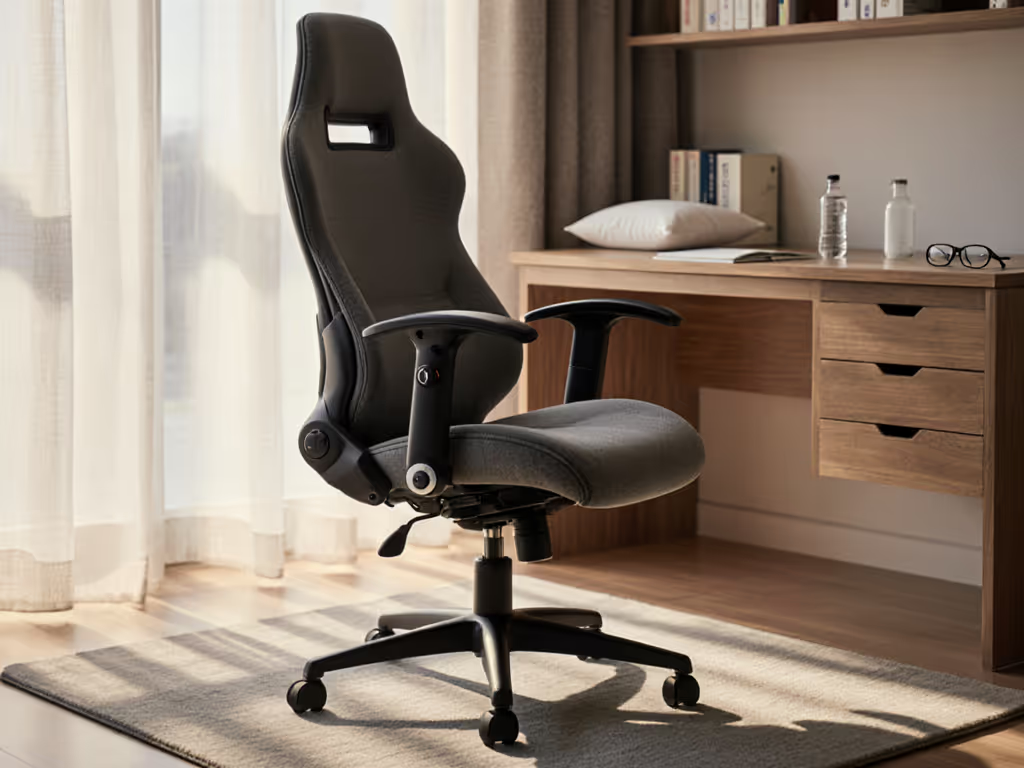
Polyester blends remain popular because they balance durability, stain resistance, and affordability. If you choose a polyester-blend chair, prioritize those with a knitted or open-weave construction; thick knitted materials, commonly used in cushioned office chairs, offer better airflow than tightly woven synthetics.
Q: How do I prevent skin irritation in office environments, particularly if I'm prone to dermatitis?
Three concrete steps: First, select a fabric with documented breathability (ask the manufacturer for information on air permeability or moisture vapor transmission rate (MVTR)). Second, enable movement first by ensuring your chair has adjustable seat depth, recline tension, and lumbar positioning. This variability means you're not sitting in the same position for hours, which is the primary driver of pressure-related irritation. Third, take standing or walking breaks every 45 minutes, allowing your skin to air-dry and pressure to redistribute.
If you have severe contact dermatitis or are sensitive to synthetic finishes, test the fabric directly. To minimize reactions to material emissions, review our guide to office chair VOCs and low-emission certifications. Sit in a demo chair for 30 minutes if possible, or request a fabric sample to hold against your forearm under your sleeve while working (this mimics the microclimate your seated surface will create).
Q: What about mesh fabrics for skin health?
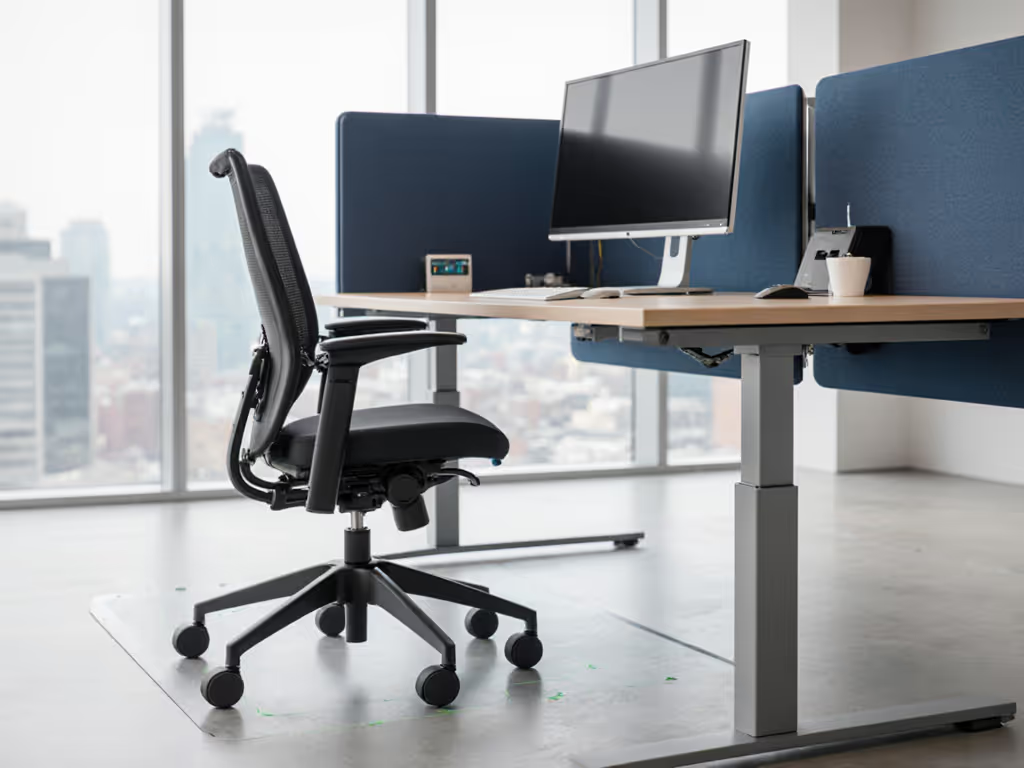
Mesh is excellent for breathability and airflow, making it a strong choice if heat and moisture are your primary concerns. The open weave allows continuous air circulation, preventing the moisture pooling that occurs with solid fabrics. For the engineering behind airflow in different mesh types, read our mesh temperature control explainer. However, mesh can sometimes create pressure-point irritation because the weave sits directly against skin without much cushioning, and repeated friction between mesh fibers and skin can cause minor abrasions if you shift frequently.
If you choose mesh, look for versions with a soft backer layer or ensure your chair has significant padding underneath. The goal is to combine mesh's breathability with enough surface compliance that skin doesn't experience sharp contact points.
Q: How does fabric durability relate to skin health over time?
As fabrics age, they degrade. Pilling, fraying, and fiber shedding create rough surfaces that increase friction and microtrauma to skin. Over time, a degraded fabric can feel like fine sandpaper against bare skin, a problem if you wear short sleeves or sit in workout clothing. Performance and contract fabrics resist pilling and maintain surface smoothness over years, whereas cheaper polyester blends may show visible wear within 18 to 24 months.
When evaluating a chair, ask about fabric weight, yarn construction, and the Martindale test score (an industry standard for abrasion resistance). A higher Martindale rating means the fabric can withstand more rubbing before showing visible wear, a direct proxy for how long it will remain skin-friendly.
Movement and Fabric: An Integrated Framework
The strongest approach to office chair dermatology is not to select a single "perfect" fabric, but to choose a chair whose design invites postural variability. When you can shorten the seat, adjust lumbar depth, and recline to offload pressure periodically, you interrupt the static contact that breeds irritation. Pair this with a fabric that breathes (whether that's wool, a quality polyester-cotton blend, or performance mesh), and you've addressed both the ergonomic and the dermatological dimensions of long-sitting comfort.
Your chair should work with your body's need for change, not against it. A fabric that wicks moisture matters most when your chair geometry allows you to shift every 20 to 30 minutes, breaking up pressure and drying the microclimate. Evidence supports this integrated view: comfort, skin health, and sustained energy are outcomes of variability enabled by design, not of a single material property.
Moving Forward: Questions to Ask Your Next Chair
When evaluating a new office chair, center skin breathability while sitting as a legitimate selection criterion alongside lumbar support and seat depth: For guidance on trials and terms, see our office chair return policy guide.
- Does the fabric have a published air permeability or moisture vapor transmission specification?
- Is the weave open enough to allow continuous airflow, or does it trap heat?
- Can I adjust seat depth and recline to create postural variety throughout the day?
- What is the fabric's Martindale rating, and how long does the maker expect it to remain pilling-free?
- Does the chair offer multiple fabric options (for instance, mesh in summer and a breathable natural fiber in winter)?
- Is there a trial period or return policy so I can test skin comfort in my actual work environment?
Your chair is not a static throne; it's a tool for daily physiological work. Choosing materials that support your skin's needs to breathe, regulate moisture, and resist degradation is as important as choosing geometry that invites movement. The intersection of these two (fabric + variability) is where true office chair dermatology begins.
Movement is medicine; chairs should enable it, not restrain it. That principle extends to skin health: the best fabric is one paired with a chair that lets your body do what it naturally wants to do (change position, reset pressure, and breathe).
Related Articles