Office Chair VOCs: Boost Air Quality & Focus
By Amina Yusuf • 12th Nov
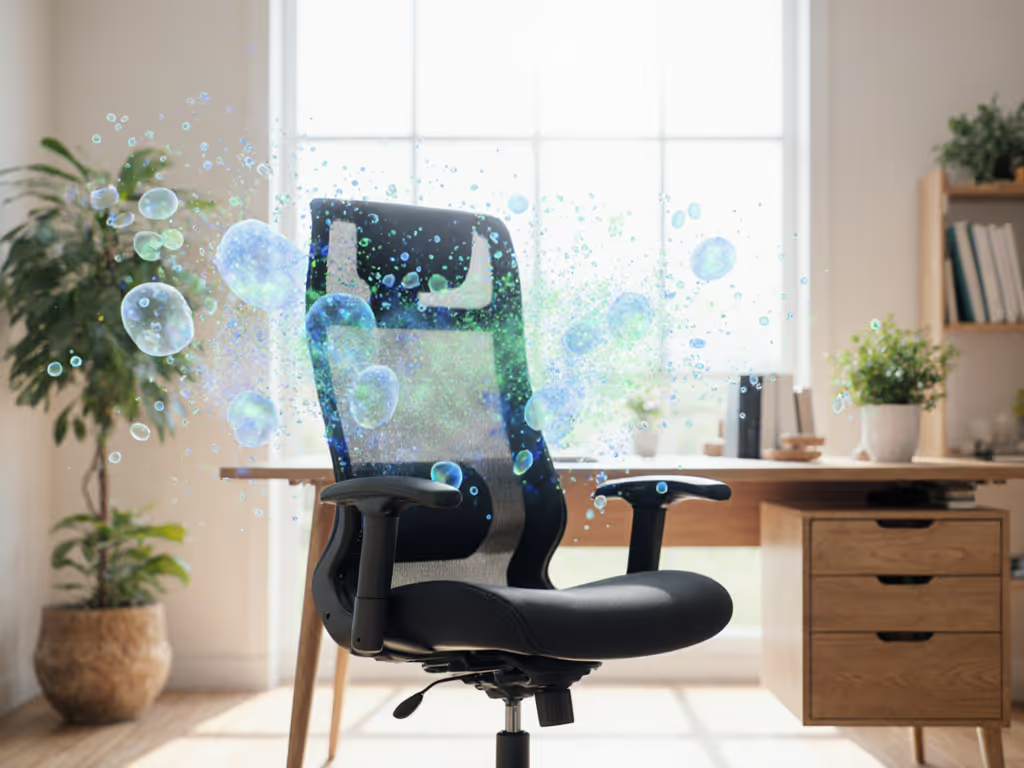
When you settle into your office chair for another work session, you're likely focused on posture or lumbar support, not invisible chemical emissions. Yet VOC emissions from office chairs quietly shape your workspace air quality, with potential impacts on your cognitive clarity and physical well-being. As a lifecycle analyst who audits materials from purchase to end-of-life, I've seen how overlooked chemical profiles undermine both health and sustainability. Let's dissect the evidence, avoid the hype, and implement solutions that align with your data-driven approach to workspace optimization.

Why Your Chair Might Be Polluting Your Workspace
Volatile Organic Compounds (VOCs) are not just theoretical risks; they are measurable contaminants in most indoor environments. According to EPA studies, indoor VOC levels are often 2-5 times higher than outdoor levels, with new furniture being a significant contributor. Office chairs emit VOCs primarily through:
- Adhesives and binders in foam cushions (releasing formaldehyde and benzene)
- Finishes and stains on wood or composite frames (emitting toluene and xylenes)
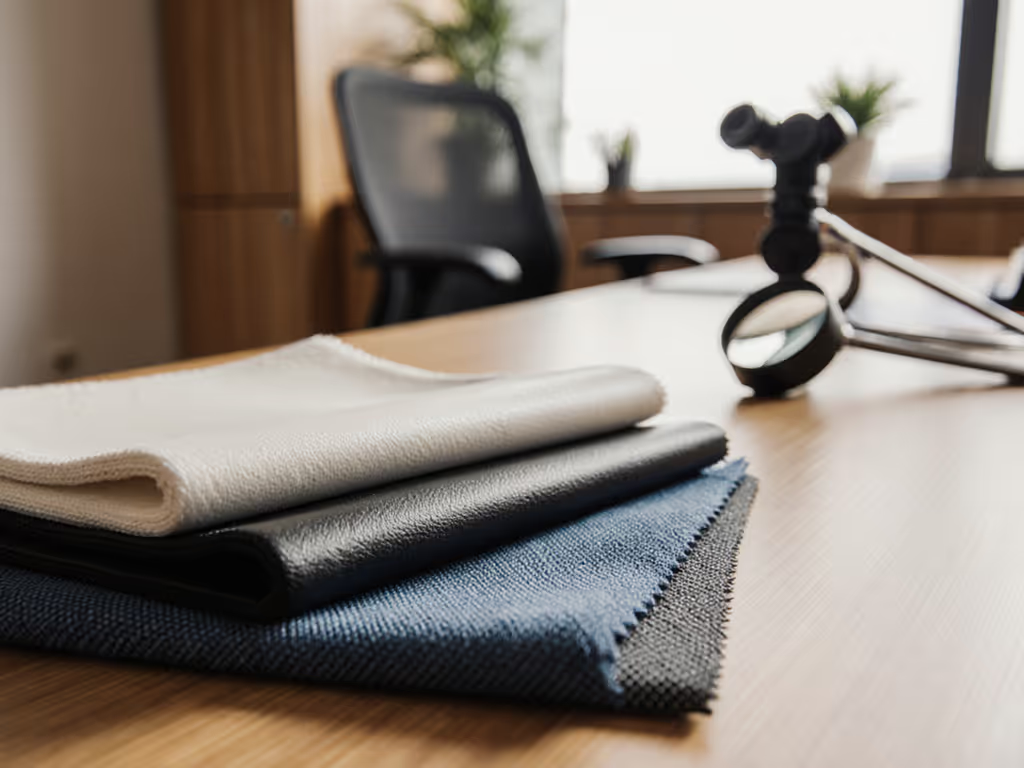
- Synthetic fabrics (off-gassing stain repellents like PFAS)
- Plastic components (releasing phthalates during temperature shifts)
Short-term exposure correlates strongly with headache frequency, eye irritation, and reduced concentration (symptoms many knowledge workers blame on "screen fatigue" alone). NIH research confirms VOCs disrupt neurocognitive function at levels common in new office furniture.
The Hidden Health Toll: Beyond Discomfort
While a stiff neck or tired eyes might seem routine, VOC exposure creates insidious patterns most professionals overlook. Consider these evidence-backed connections:
- Cognitive Decline: A Harvard T.H. Chan School of Public Health study linked elevated TVOC (Total Volatile Organic Compounds) levels to 61% slower decision-making speed and 101% more basic strategy errors, critical for complex knowledge work.
- Respiratory Stress: For those with asthma or allergies (common in high-focus professions), VOCs trigger inflammation that worsens symptoms even at "safe" regulatory limits.
- Chronic Load: Formaldehyde, a Group 1 human carcinogen per IARC, is routinely detected in chair foam and wood adhesives. Long-term exposure risks compound with your 40+ weekly desk hours.
This isn't alarmism. It is systems thinking applied to your workspace: every material choice creates an audit trail of health and environmental consequences. To connect the dots between air quality and output, explore how ergonomic chairs influence mood and productivity.
Decoding "Low VOC" Claims: What Actually Matters
The term "low VOC" is largely unregulated for furniture. Here's how to cut through the noise using calm clarity:
| Certification | What It Tests | Limitations | Relevance to Chairs |
|---|---|---|---|
| GREENGUARD Gold | 360+ VOCs at real-world conditions | Doesn't assess durability or repairability | High - verify test reports for seating |
| BIFMA LEVEL | Chemical emissions + lifecycle factors | Weak on repairability metrics | Medium - check Level 3+ models |
| Declare Label | Full material disclosure | Voluntary participation | Critical - look for phthalate-free foam |
Key insight: Chair-specific VOC risks peak during the first 6 months as finishes and foam off-gas. But here's where sustainability intersects with health: chairs built for longevity (with replaceable parts and modular frames) minimize repeated VOC exposure from frequent replacements. I once helped a coworking space downsize 70 chairs; only the models with published parts lists and standard fasteners avoided the dumpster. That's design for a second life in action.
Your Action Plan: From Testing to Tangible Air Quality Gains
Step 1: Measure Before You Trust Skip guesswork. Use a TVOC monitor ($50-200) for 72 hours in your workspace. Action thresholds:
- < 220 ppb: Optimal for focus (ASHRAE Standard 62.1)
- 220-660 ppb: Moderate, prioritize ventilation
- > 660 ppb: High risk, relocate chair immediately
Step 2: Source Smarter Prioritize healthy office materials with proof:
- Frame choices: Solid wood (not composites) with water-based finishes cuts formaldehyde by 70% vs. particleboard
- Foam standards: CertiPUR-US® only verifies current emissions, not long-term off-gassing. Demand Declare labels showing zero phthalates
- Fabric truths: Natural fibers (organic cotton, wool) emit fewer VOCs than synthetics. Avoid "stain-resistant" coatings; they are PFAS factories
Step 3: Accelerate Off-Gassing
- 48 hours pre-use: Unpackage chairs outdoors in direct sunlight (UV breaks down VOCs)
- Ventilation strategy: Run a box fan facing outward in a window for 4+ hours daily during the first month
- Air purification: HEPA + activated carbon filters (not ozone generators) reduce existing VOCs by 50% in controlled studies
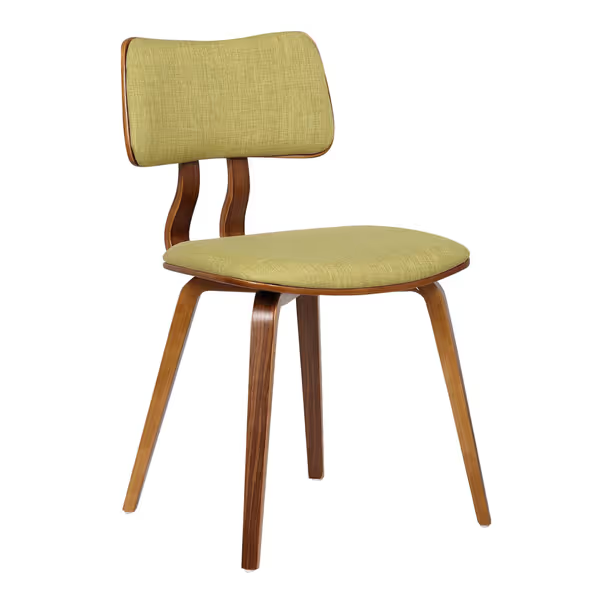
Armen Living Jaguar Dining Chair
Stylish mid-century modern comfort for dining and versatile living spaces.
$100.99
MaterialWalnut Wood & Green Fabric
MaterialWalnut Wood & Green Fabric
Pros
Elegant mid-century design.
Plush upholstered comfort.
Cons
Mixed sturdiness/durability reports.
Customers find the dining chair looks great, is easy to assemble, and offers good comfort and value for money. The chair's sturdiness receives mixed feedback - while some find it sturdy, others report it being wobbly from day one. Moreover, durability is a concern, with multiple customers reporting that the legs split from the bottom up. The size also gets mixed reactions, with some appreciating its nice dimensions while others find it too small.
Customers find the dining chair looks great, is easy to assemble, and offers good comfort and value for money. The chair's sturdiness receives mixed feedback - while some find it sturdy, others report it being wobbly from day one. Moreover, durability is a concern, with multiple customers reporting that the legs split from the bottom up. The size also gets mixed reactions, with some appreciating its nice dimensions while others find it too small.
Why Durability = Cleaner Air (Long-Term)
Here's the uncomfortable truth no one admits: a "low VOC" chair that breaks in 2 years creates more cumulative exposure than a durable, repairable model. When you replace chairs frequently, you reset the high-emission off-gassing cycle repeatedly. That's why I prioritize indoor air quality chairs with:
- Published service manuals (e.g., modular lumbar assemblies)
- Replaceable fabric kits (avoiding full-chair disposal)
- Frames using mechanical fasteners (not glue-laminated joints) Learn how to spot durable chair construction before you buy.
During that coworking space audit, I noted a pattern: chairs rebuilt using manufacturer parts maintained stable VOC profiles year after year. Those reliant on adhesives or proprietary parts spiked during "temporary fixes." Sustainability is not a colorway; it is a material vocabulary explained through transparency and action.
The Sustainable Comfort Equation
True non-toxic office seating combines chemical safety with endurance. When you design for a second life, you:
- Avoid repeated VOC exposure from new chairs
- Reduce landfill burden (a single chair = 200+ lbs of waste)
- Protect cognitive performance through consistent air quality
As I always say: Buy once, maintain well, and the chair returns the favor.
Further Exploration Resources
Ready to dive deeper? Prioritize these evidence-based next steps:
- Test your air: EPA's VOC testing guidelines for homes/offices
- Demand transparency: Search for Declare labels in furniture databases
Your chair should support your focus, not undermine it. By treating air quality as a core performance metric, you're not just optimizing your workspace. You're voting for a future where low VOC office furniture is the standard, not the exception. And that is sustainable comfort you can measure.
Related Articles