Ergonomic Chair Certifications: What Global Standards Mean
By Amina Yusuf • 17th Jan
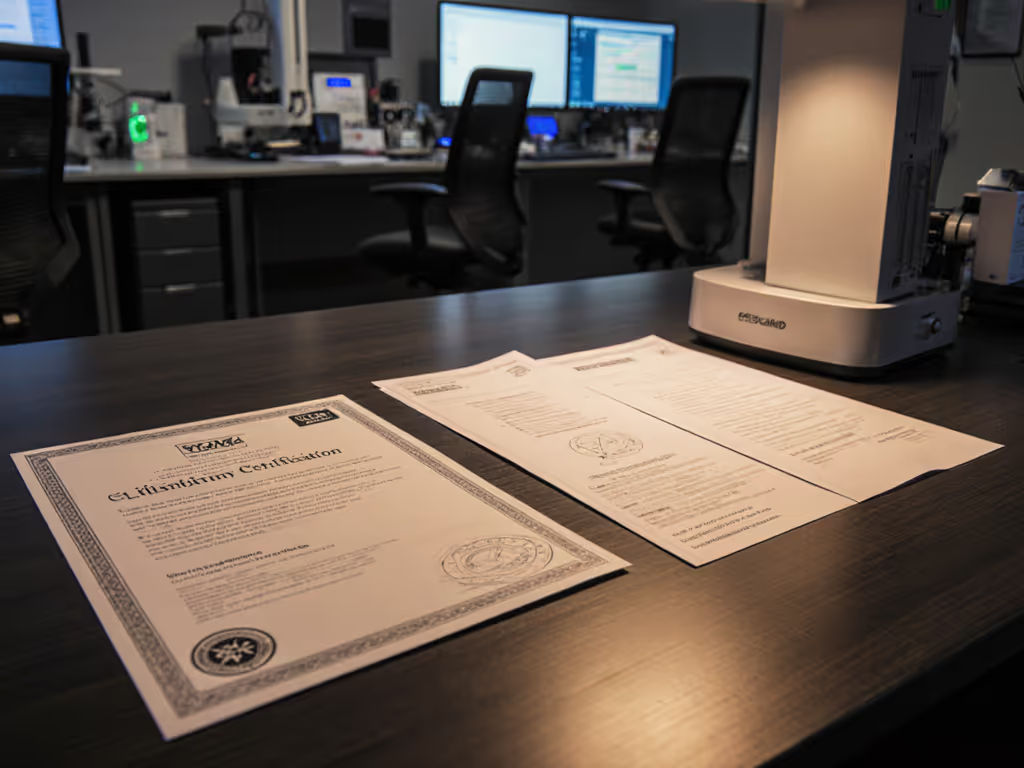
When you're researching an ergonomic chair, the alphabet soup of certifications can feel like a maze, but understanding global compliance seating standards is your first defense against buying a chair that fails you months into use. Let's cut through the jargon: certifications aren't marketing fluff. They're your audit trail for durability, safety, and long-term value. As a lifecycle analyst who's seen chairs outlive their warranties (or disintegrate prematurely), I know these standards directly impact whether your chair becomes a repairable asset or disposable clutter. And here's the truth nobody tells you: repair beats replace when it comes to sustainable comfort.
Why Certification Confusion Is Costing You Comfort
Most "ergonomic" chairs on retail sites carry zero verifiable certifications. That's not oversight, it's an opportunity for brands to skip costly durability testing.
Q: Aren't all "ergonomic" chairs tested to the same standard?
A: Absolutely not. There's no universal certification. Instead, chairs comply with regional frameworks that reflect very different priorities. In North America, ANSI/BIFMA certified chairs dominate. The BIFMA X5.1 standard tests for backward tilt stability and high-cycle wear (like 200,000+ seat load cycles), but it's voluntary. You'll see this badge on corporate furniture, yet it tells you little about forward stability or how it fits petite or tall users. Meanwhile, the EN 1335 European standard (part of CE marking) is often legally mandatory. It mandates rigorous forward/side stability tests and classifies chairs by user size (Class A/B/C), directly addressing fit extremes that plague standard office chairs. Skipping region-specific compliance? You might get a chair that's BIFMA-certified but fails EN 1022 stability tests, meaning it could tip forward if you lean to grab a pen. I once audited a shipment where 30% of "global" chairs had to be re-engineered for EU warehouses. That's wasted carbon, cost, and landfill risk.

Q: How do I know if a chair's durability testing matches my 8-hour workday?
A: Demand transparency on chair durability testing methods. BIFMA's tests simulate typical office use (8 hours/day, 5 days/week for 10 years). But if you're a 300-lb developer working 12-hour days? Standard tests won't cover you. Look for chairs exceeding baseline cycles, like those rated for 400,000+ cycles or 24/7 use standards (FNEW-83-269E). Crucially, testing must include reassembly checks. A chair passing initial tests but failing after one disassembly (common with proprietary fasteners) guarantees landfill destiny. I've cataloged chairs where foam compressed to 50% density in 18 months because manufacturers skipped long-horizon fatigue testing. Sustainable comfort isn't built on disposability, it's built on repairable parts and documented performance decay.
Q: Do certifications like ISO 7174 actually matter for breathability?
A: Selectively, but they're rarely the full picture. ISO 7174 measures seat pan pressure distribution (critical for tailbone pain prevention), yet it's obscure compared to buzzier eco-labels. Meanwhile, GREENGUARD Gold certifies low VOC emissions (vital for home offices), but says nothing about adjustability or structural integrity. The trap? Brands tout single certifications while hiding poor durability scores. Always cross-reference: Does the chair have both ANSI/BIFMA X5.1 and GREENGUARD? If it only has the latter, it might be "healthy" air-wise but collapse under serious use. Material vocabulary matters here: "High-resilience foam" means nothing without density specs (>= 1.8 lb/cu.ft for longevity) or BIFMA-backed compression data.
The Hidden Link Between Certifications and Repairability
Certifications rarely mention serviceability, but they're quietly shaping it. Consider warranty terms: A 10-year warranty on a BIFMA-certified chair means little if the manufacturer doesn't publish service manuals or stock replaceable parts. For brand-by-brand coverage pitfalls, see our office chair warranty comparison. Contrast that with chairs built to ISO 14001 (environmental management) standards, they often prioritize modular frames and standardized fasteners because repairability is part of the standard. I've seen chairs rebuilt three times solely because the brand published exploded diagrams and sold $5 casters. When chairs live twice as long, you stop counting upfront cost and start counting years of pain-free work.
This is where global compliance seating gets strategic. European EN standards now push for disassembly scores in procurement specs. Why? Because chairs failing EN 1335's dimensional classes (say, for users >6'2") often get trashed, unless they're modular. A tall developer friend bought a chair rated for 350 lbs with standardized bolts. When the lumbar support failed, he 3D-printed a replacement. That's not luck, it's systems thinking in action.
Your Action Plan: Decoding Certifications Without Falling for Hype
- Match standards to your body and usage: If you're petite (<5'4") or tall (>6'2"), prioritize EN 1335 Class A/B/C over ANSI's vague 5th to 95th percentile range. For heavy users, confirm 24/7-rated durability (FNEW-83-269E) alongside BIFMA.
- Demand the test report: Reputable brands share SGS or Intertek test summaries. Look for passed stability tests (front/side/back), cycle counts, and reassembly validation. If they hide it, run.
- Audit the warranty for repair pathways: "Lifetime warranty" means nothing if parts aren't sold. Does the brand list spare parts? Publish service docs? Bonus if they offer refurbishment, that's true sustainability.

The chair that keeps you productive isn't the one with the flashiest lumbar knob. It's the one engineered to last, with certifications that prove it can handle your all-day crunch and get rebuilt when parts wear. Buy once, maintain well, and the chair returns the favor. After all, when I watched those coworking chairs cycle back to desks instead of dumpsters, it wasn't magic. It was standards meeting serviceability. repair beats replace, every time you choose a chair built to walk the maintenance pathway.
Further Exploration
Dive deeper into the mechanics of durability with BIFMA's free test protocol summaries. For eco-conscious criteria, explore our guide to sustainable ergonomic seating. Or explore how circular economy certifications (like Cradle to Cradle) are reshaping chair design, where disassembly isn't an afterthought, but the starting point.
Related Articles