
Ergonomic Chair Adjustment Period: What’s Normal
By Owen McKay • 1st Jan

Ever felt awkward in a new ergonomic chair despite it supposedly being "the perfect fit"? You're not alone. Understanding the ergonomic chair adjustment period is crucial when transitioning to ergonomic seating. That initial discomfort isn't a flaw in the chair (it's your body recalibrating after years of compromised positions). Let's walk through what's normal, how long it typically lasts, and most importantly, how to navigate this shift with confidence.
Why Your Body Needs Time to Adjust
Muscle Memory vs. Better Posture
Your muscles have literally memorized your old sitting habits: slouching, leaning, or compensating for poor support. When you introduce proper ergonomic support, those dormant muscles suddenly engage while overused ones get relief. This "posture retraining" feels strange at first, but it's exactly what you want. I've seen this play out countless times, including during a particularly hectic Monday rollout where we helped twelve people fine-tune their chairs in just twenty minutes. Two weeks later? Happier shoulders and fewer comfort-related support tickets. For a deeper look at how better seating boosts creativity and concentration, see our mood and productivity guide.
Support Zones Work Differently
Quality ergonomic chairs distribute pressure across multiple zones rather than concentrating it in one spot. This new pressure mapping can feel unfamiliar, like when your feet dangle after switching from a chair with improper seat depth. The good news? Your body adapts faster than you think.
What to Expect: A Realistic Timeline
First 48 Hours: The "Hmm, This Feels Off" Phase
- Your lower back might feel either strangely supported or awkwardly pressured
- You may instinctively slouch because upright posture now requires active muscle engagement
- Minor soreness in shoulders or hips as your body finds neutral alignment
This is completely normal. Don't mistake adaptation for incompatibility. Many people abandon proper ergonomic settings during this phase, not realizing they're just one adjustment away from comfort.
Week 1: The "Aha!" Moments Begin
- Discomfort decreases noticeably
- You start noticing specific adjustments that make the biggest difference (seat depth, lumbar placement)
- Posture becomes more natural without constant conscious correction
This is when small fit tweaks compound into big comfort and focus dividends. Most users report significantly improved focus by day 5 when they've properly dialed in just 2-3 key adjustments.
Weeks 2-4: The Sweet Spot
- Your body has developed new muscle memory
- You stop thinking about posture entirely
- You notice reduced end-of-day fatigue and fewer "ouch" moments
At this stage, what felt strange initially now feels like the only way to sit. That's the power of a successful new chair adaptation.
Your 5-Step Time-Boxed Adjustment Plan
Here's the approach I've used with hundreds of knowledge workers, each step designed for under 5 minutes. This stepwise method prevents overwhelm while building friendly precision with your chair's controls. Prefer a full walkthrough of every control? Follow our adjustable chair setup guide.
1. Map Your Critical Clearances (3 Minutes)
- Thigh clearance: Adjust seat height until feet rest flat with 2-4 inches between seat edge and back of knees
- Elbow clearance: Raise/lower chair until elbows rest at 90° when hands are on keyboard
- Head clearance: Position headrest (if available) to support skull base, not neck
"Confidence with controls is half the battle; small tweaks compound."
2. Dial in Dynamic Support Zones (4 Minutes)
- Lumbar: Find the natural lumbar curve in your lower back, then adjust until pressure feels distributed, not pinpoint
- Seat depth: If adjustable, move front edge until you feel even pressure across thighs
- Tilt tension: Set resistance so reclining requires slight effort (prevents bouncing)
If your chair has labeled controls like the ESaure Office Chair A16 with its clearly marked lumbar adjustment, this becomes infinitely easier. Intuitive levers save you from guessing games during the ergonomic learning curve.
3. Test Your Movement Ranges (2 Minutes)
- Recline gently while maintaining contact with lumbar support
- Shift positions: forward for focused tasks, reclined for calls To build healthy movement habits, practice these dynamic sitting techniques.
- Verify armrests stay at elbow height in all positions
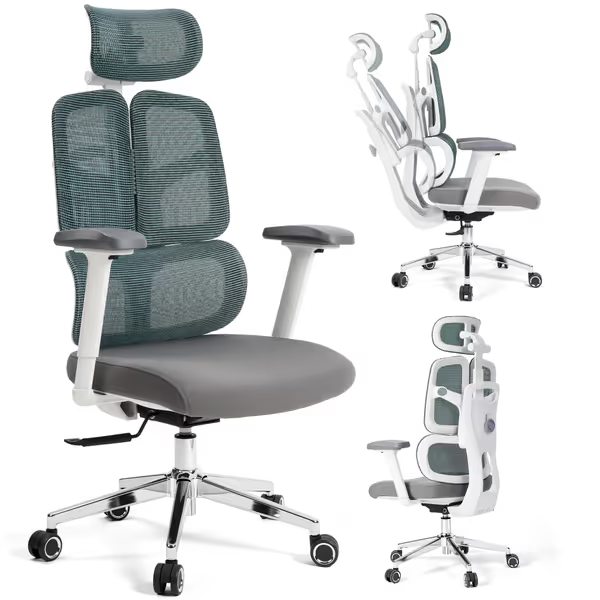
Ergonomic Office Chair 500 LBS
Heavy-duty ergonomic chair for all-day comfort and spinal support.
$277.98
Weight Capacity500 LBS
Weight Capacity500 LBS
Pros
Adaptive lumbar support reduces spinal pressure.
Highly adjustable (3D arms, headrest, seat depth, tilt).
Cons
Specific aesthetics may not suit all office decors.
I can sit for long hours without feeling sore; it's sturdy and looks expensive.
I can sit for long hours without feeling sore; it's sturdy and looks expensive.
4. Document Your Sweet Spot (1 Minute)
- Note settings on a sticky: "Seat: 3rd notch, Lumbar: max height, Tilt: 4th click"
- Take a photo of your ideal configuration
- Set it, then move to your next task - no perfectionism needed
5. Daily Micro-Adjustments (Ongoing, <1 Minute)
- Morning: Reset to documented positions
- Midday: Tweak one variable (e.g., increase lumbar firmness)
- Evening: Note what worked best
This time-boxed approach prevents analysis paralysis. In my experience, most people achieve 80% of their optimal fit within three days using this method.
Signs Your Adjustment is Working
After your body acclimation period, watch for these evidence-based indicators:
- You catch yourself sitting upright without thinking
- End-of-day energy matches mid-day levels
- Colleagues notice you're more engaged during video calls
- You stop fidgeting or adjusting your position constantly
If pain persists beyond 4 weeks, revisit your setup. Some chairs simply don't span your body's needs. Petite or taller users (under 5'4" or over 6'2") often require models with extreme adjustment ranges. Start with our body-fit adjustments guide to match features to your frame.
Your Actionable Next Step
Today, complete just Step 1 of the time-boxed plan. Set a 3-minute timer, map your critical clearances, and document where you land. That's it. Tomorrow, add Step 2. This posture retraining guide works because it's manageable (you're not overhauling your entire setup at once).
Remember: the goal isn't perfection on day one, but progress through small, sustainable tweaks. When you approach your ergonomic chair adjustment period with this mindset, you'll transform discomfort into confidence, one five-minute session at a time.

Small fit tweaks compound into big comfort and focus dividends.
Related Articles