Top-Rated Ergonomic Task Chairs: Durability Focused
By Anika Sethi • 3rd Oct
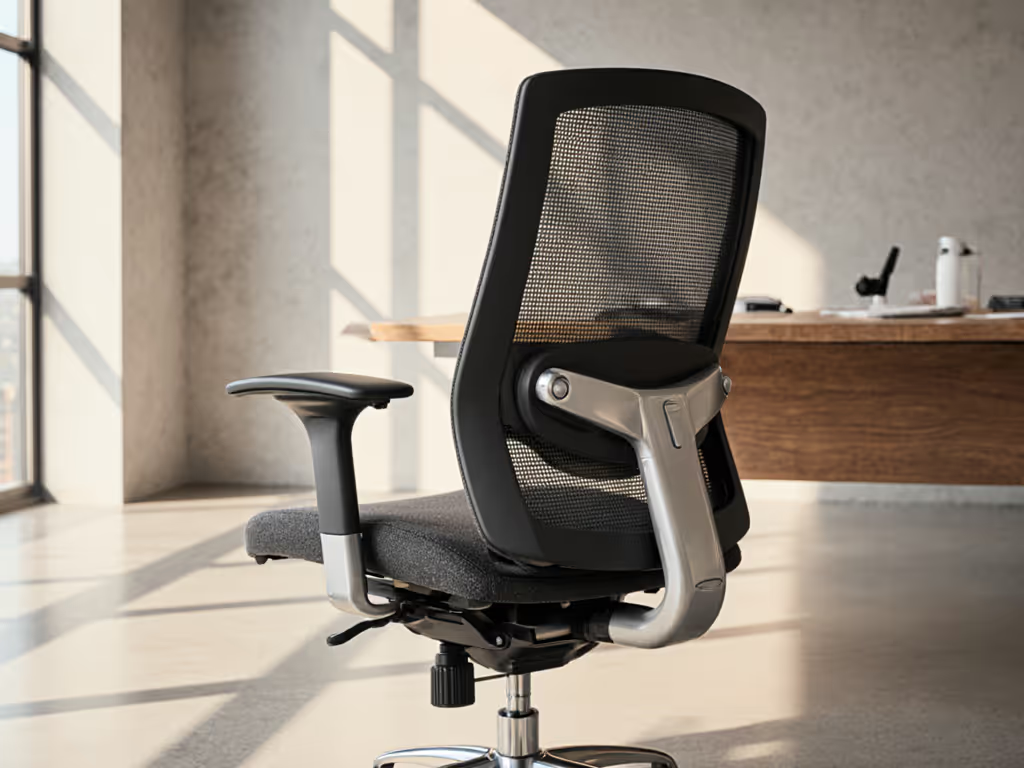
When selecting the best ergonomic task chair for your workspace, durability isn't merely about longevity, it's intrinsically linked to maintaining proper biomechanical support over time. Similarly, the notion of an executive office chair has evolved beyond mere status symbol to represent a tool engineered for sustained performance. In our era of hybrid work, where chairs must withstand daily use for years rather than months, understanding what constitutes genuine durability becomes essential. This guide provides a systematic approach to evaluating ergonomic task chairs through the lens of sustainable support, where movement-enabling design meets enduring construction. Movement is medicine; chairs should enable it, not restrain it.
Why Durability Matters in Ergonomic Seating
From a biomechanical perspective, chair durability directly impacts how well support systems maintain their function through thousands of micro-movements. As research in occupational ergonomics has demonstrated, joints thrive on variability, and chairs that degrade quickly compromise this essential movement variability. Consider these evidence-cited durability factors:
- Structural integrity: Chairs must maintain alignment through 8,000+ position changes annually
- Material resilience: Fabrics and foams should retain supportive properties after 20,000+ hours of compression
- Mechanical steadfastness: Adjustment mechanisms need to function precisely after years of regular use
- Component compatibility: All parts must work in concert throughout the chair's lifespan
A chair that loses its intended function within two years creates a hidden cost far exceeding the initial price tag. When support systems falter, users unconsciously compensate through poor movement patterns, leading to increased fatigue and discomfort that often manifests months or years later.
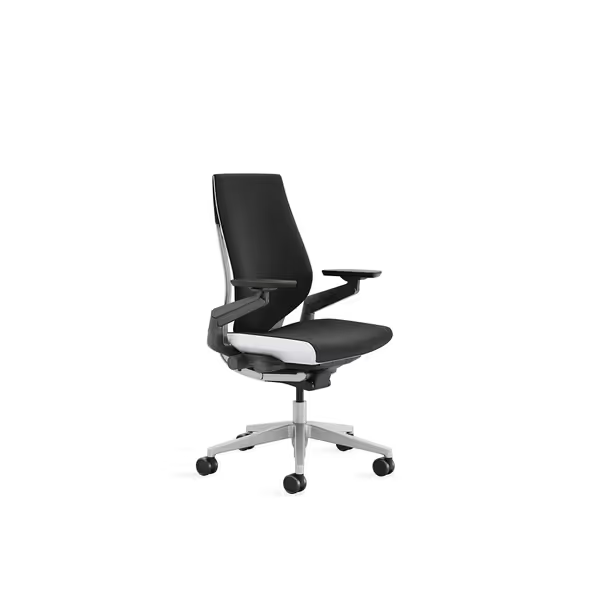
Steelcase Gesture Office Chair
Adapts to you, reducing pain and encouraging healthy movement.
$1510
Armrests360-degree adjustable
Armrests360-degree adjustable
Pros
Intuitive controls for precise, personalized fit.
Promotes micro-movements for all-day comfort.
Cons
Recline mechanism receives mixed user feedback.
Customers find the office chair comfortable without causing soreness, with intuitive adjustments that adapt to sitting and moving positions. The chair is solidly built, well-designed, and provides good back support, with one customer noting their lower back has improved.
Customers find the office chair comfortable without causing soreness, with intuitive adjustments that adapt to sitting and moving positions. The chair is solidly built, well-designed, and provides good back support, with one customer noting their lower back has improved.
Step 1: Assessing Structural Integrity Through Movement Testing
Rather than focusing solely on static specifications, perform this movement-based assessment to evaluate true structural durability:
- Recline fluidity test: Execute 10-15 controlled reclines while noting:
- Smoothness of movement throughout the range
- Consistency of resistance (no sudden 'dead spots')
- Whether the chair returns to neutral position without assistance
- Lateral stability check: While seated, gently tilt side-to-side to assess:
- Base stability (no excessive wobble)
- Frame rigidity (no creaking or flexing)
- Whether support remains consistent during movement
- Dynamic adjustment evaluation: Perform adjustments while seated to verify:
- Controls remain accessible through full range of motion
- Settings maintain position during movement
- No reduction in range of adjustment after repeated use
"Movement is the best stress test for ergonomic chairs. How a chair performs through motion matters more than its static specifications."
This methodology reflects my core principle to enable movement first, and durable chairs must maintain supportive integrity through constant minor adjustments, not just during stillness.
Step 2: Evaluating Material Longevity for Movement-Friendly Design
Durability begins with materials engineered to support movement without degradation. Traditional ergonomic chairs often prioritize initial comfort over long-term performance, but premium chair durability requires thoughtful material selection:
| Material Type | Movement Benefits | Durability Considerations | Ideal For |
|---|---|---|---|
| High-resilience mesh | Permits natural spinal flexion, breathability | Mesh tension retention over time; resistance to sagging | Hot climates, movement-focused users |
| Advanced foam composites | Supports micro-movements without excessive resistance | Compression recovery rate; resistance to permanent deformation | Users needing firm yet dynamic support |
| Reinforced fabric weaves | Maintains supportive structure through movement | Abrasion resistance; ability to maintain shape after repeated compression | Environments with frequent position changes |
| Aluminum alloy frames | Provides stable foundation for movement mechanics | Resistance to metal fatigue; ability to maintain precise tolerances | Heavy daily use; users requiring precise adjustments |
When evaluating chairs, physically test how materials respond to movement, not just initial impressions. Press on seat edges while shifting weight to feel how materials respond to dynamic loading. Examine lumbar supports by applying pressure through multiple angles to assess whether support remains consistent.
Step 3: Comparing Top Executive Ergonomic Chairs Through Durability Metrics
Rather than relying on subjective comfort claims, apply this evidence-based durability framework when comparing chairs:
- Material testing data: Request manufacturer specifications on:
- Material compression recovery rates (measured after 5,000 cycles)
- Tensile strength testing for moving components
- Breathability ratings measured during simulated movement
- Component longevity indicators:
- Gas lift piston testing (minimum 100,000 cycles for quality chairs)
- Tilt mechanism durability measured in controlled testing environments
- Armrest stability under repeated lateral pressure
- Repairability metrics:
- Availability of individual replacement parts
- Modularity of design (ease of component replacement)
- Service network accessibility
Among current models, the Herman Miller Aeron demonstrates exceptional durability metrics through its use of Pellicle mesh that maintains tension properties after extensive use. Its aluminum frame construction provides a stable foundation that supports movement without degradation. The chair's modular design also allows for component replacement, extending its functional lifespan significantly.
Step 4: Matching Your Body Mechanics to Chair Durability Features
Selection shouldn't end with durability specifications, because your movement patterns directly impact how chairs wear over time. Consider these factors when matching your body to chair durability:
- Movement frequency: High-movement users (frequently changing positions) need chairs with reinforced mechanism components
- Body mass distribution: Variable weight distribution through movement requires materials that maintain consistent support properties
- Task-specific patterns: Repetitive motions (like frequent reclining) demand specific component reinforcement
For users exceeding standard anthropometric ranges (petite under 5'4" or tall over 6'2"), durability becomes even more critical. Chairs not properly scaled to body dimensions experience uneven stress patterns that accelerate wear in specific areas. The Steelcase Gesture addresses this through its LiveBack technology that maintains supportive integrity across a wider range of body types and movement patterns.
This approach reflects my experience working with a developer who initially believed standing all day was the solution to her hip tightness. By implementing a chair with appropriate seat depth adjustment and responsive recline mechanics, we enabled her natural movement patterns, reducing discomfort while simultaneously improving her step count and overall activity levels.
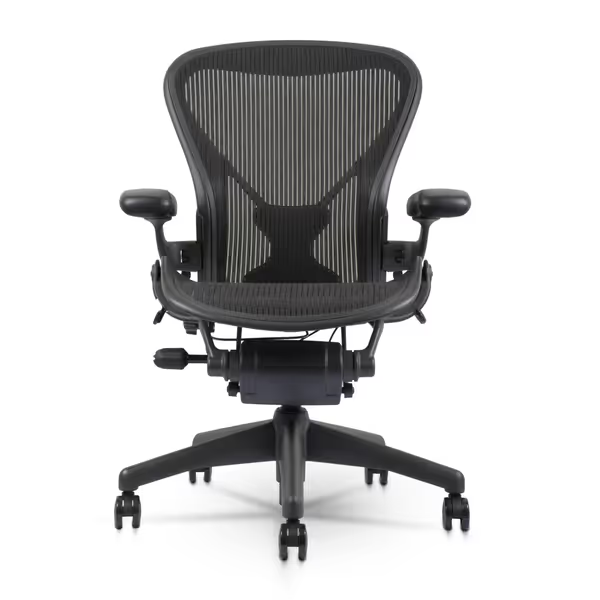
Herman Miller Aeron Size B
Sustained comfort, superior back support, reduced pain for all-day sitting.
$590
Seating SizeSize B (Medium)
Seating SizeSize B (Medium)
Pros
Exceptional all-day comfort, eliminates back pain.
PostureFit SL provides dynamic lumbar and sacral support.
Cons
Assembly instructions can be unclear.
Customers find the Aeron chair to be of great quality, particularly suitable for office and gaming use, and consider it well worth the price. The chair receives positive feedback for its comfort, back support, and condition, with customers noting they can sit in it all day and never experience back pain.
Customers find the Aeron chair to be of great quality, particularly suitable for office and gaming use, and consider it well worth the price. The chair receives positive feedback for its comfort, back support, and condition, with customers noting they can sit in it all day and never experience back pain.
Step 5: Maintenance Practices for Long-Term Durability
Even the best-engineered chairs require appropriate care to maintain their movement-enabling properties. For step-by-step care routines that extend lifespan, see our ergonomic chair maintenance guide. Implement these evidence-based maintenance practices:
- Monthly mechanism checks: Lubricate moving parts with manufacturer-approved lubricants to maintain smooth operation
- Quarterly tension recalibration: Adjust tilt tension to compensate for natural material settling
- Biannual component inspections: Check for loose bolts, worn casters, and fabric integrity at stress points
- Annual professional servicing: For high-use chairs, consider manufacturer-recommended maintenance
Document your chair's performance with simple metrics. Note when adjustments become less precise or when movement feels less fluid. This data provides valuable insight into when maintenance or component replacement becomes necessary.
Making Your Durability-Focused Selection
Choosing the best office task chair requires moving beyond superficial comfort assessments to evaluate how well chairs maintain their movement-enabling properties over time. The most valuable ergonomic investment isn't necessarily the most expensive option, but rather the chair that delivers consistent biomechanical support through thousands of daily micro-movements.
For professionals seeking the intersection of top-tier ergonomic features and genuine durability, prioritize chairs that:
- Demonstrate transparent material testing data
- Feature modular designs that allow component replacement
- Maintain consistent support properties through movement
- Offer appropriate adjustment ranges for your specific anthropometry
- Come with realistic, comprehensive warranty coverage
When evaluating options, remember that true executive ergonomic chair quality isn't measured in initial comfort alone, but in how well the chair supports your movement patterns year after year. The financial and physiological return on investment comes from sustained performance, not just the initial purchase.
Further Exploration
To deepen your understanding of durable ergonomic seating solutions:
- Review manufacturer white papers on material testing protocols
- Connect with ergonomics professionals who specialize in long-term workspace assessments
- Compare warranty terms across manufacturers (paying particular attention to coverage of moving components)
- Explore refurbished programs from reputable manufacturers that include component replacement
For those responsible for outfitting multiple workstations, consider requesting demo units with extended trial periods to properly evaluate durability through movement, rather than relying on static showroom assessments. The true measure of an ergonomic chair's value emerges not in the first hour, but through consistent, reliable support over years of daily use. Enable movement first, and let durability be the foundation that makes sustained healthy movement possible.
Related Articles
Product Comparisons: Budget & Materials
Top 5 Ergonomic Chairs Under $500 for Back Pain Relief
Get a data-driven shortlist of five ergonomic chairs under $500 that reduce back strain by optimizing seat depth, recline sync, and lumbar adjustability. Follow the simple fit rule - match seat depth to femur length - to choose the right model for lasting relief and better focus.