Stay Steady: Balance-Friendly Office Chairs for Vestibular Disorders
By Amina Yusuf • 8th Jan
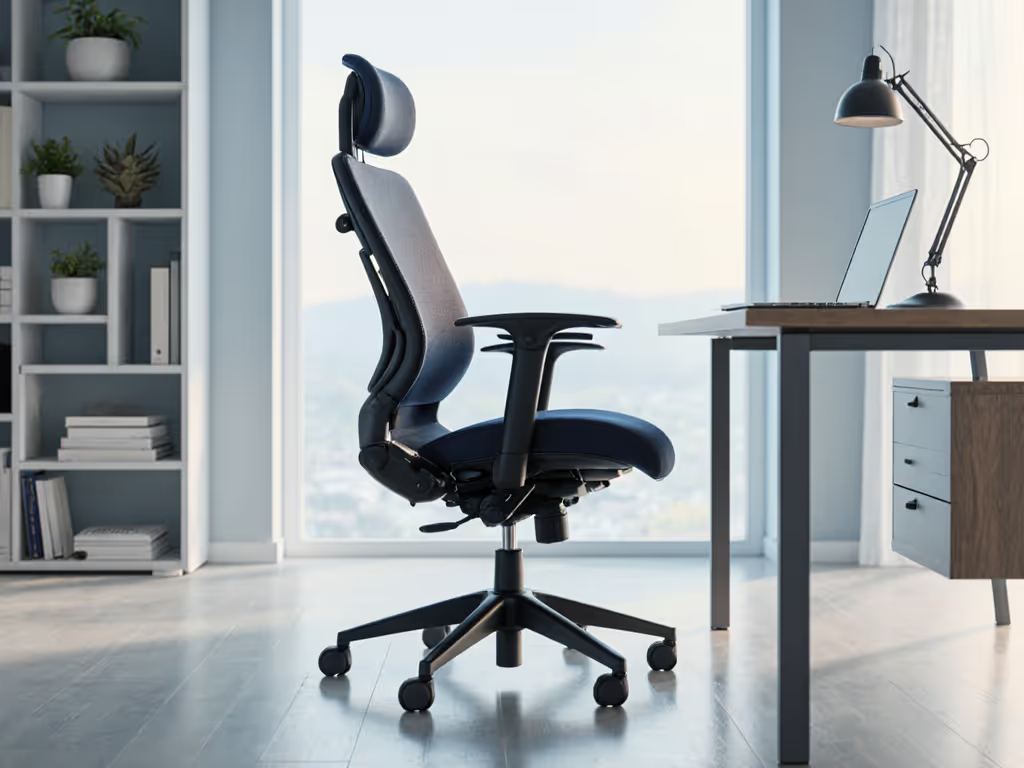
When vestibular disorders turn your workspace into a potential trigger zone, the right seating isn't just about comfort (it is about) maintaining equilibrium in your daily workflow. Finding appropriate vestibular disorder ergonomic chairs can transform dizzying struggle into stable productivity. The search for genuine balance-friendly office seating requires moving beyond generic "ergonomic" claims to identify solutions that respect motion sensitivity while supporting spinal alignment. As someone who evaluates chairs from purchase through repair and resale, I've seen how thoughtful design choices create lasting value, not just for individual users, but for entire workspaces seeking sustainable seating solutions.
Understanding Vestibular Challenges in the Workplace
How Vestibular Disorders Interact with Office Environments
For those managing vestibular disorders, standard office chairs can inadvertently become triggers. The subtle rocking of a poorly stabilized base, the unexpected movement during reclining, or the visual disorientation from certain fabric patterns can all contribute to dizziness episodes. Research confirms that between 35-40% of adults experience vestibular issues at some point, with many working professionals managing chronic conditions that require specific environmental modifications.
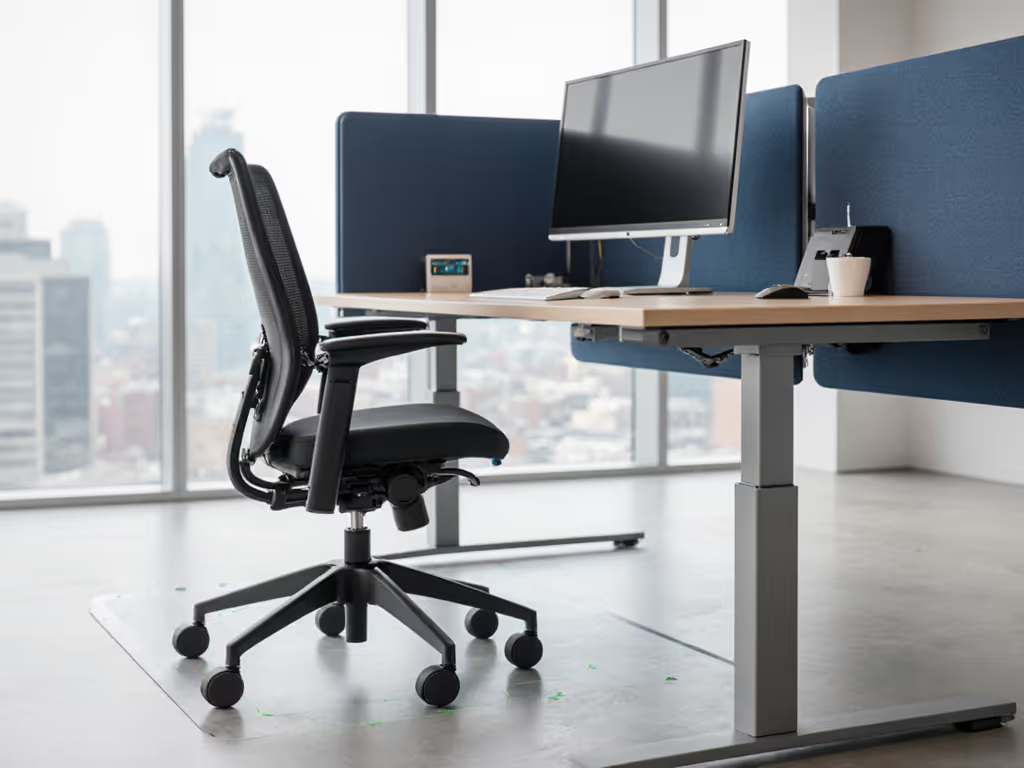
Unlike general ergonomic concerns, vestibular-friendly design must address both physical stability and sensory processing. This requires a systems-thinking approach, you cannot simply "adjust" your way out of motion sensitivity when the fundamental design amplifies rather than dampens movement. Pair chair selection with broader workstation changes using our ergonomic workstation setup guide to reduce visual and motion triggers across your environment.
What Makes Vestibular Disorder Ergonomic Chairs Different?
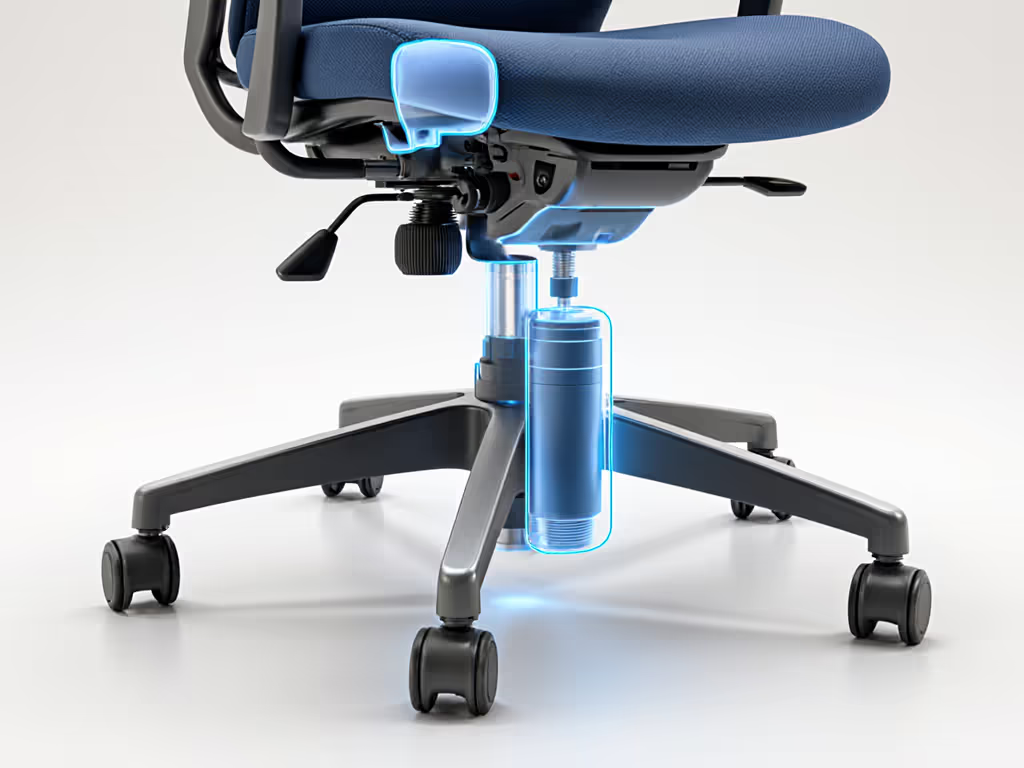
The critical difference lies in intentional stability engineering. While most "ergonomic" chairs prioritize movement freedom (which benefits many users), vestibular disorder solutions require:
- Reduced lateral play in the base mechanism
- Controlled recline rates that don't trigger motion responses
- Visual stability cues through consistent color patterns
- Weighted bases that resist unintended movement
- Predictable adjustment mechanics that don't create sudden shifts
These aren't aesthetic choices, they are physiological necessities. During an audit of coworking spaces, I noticed a pattern: chairs that returned to service after multiple users shared one common trait: standardized fasteners that technicians could reliably adjust without special tools. When a chair accommodates diverse bodies through thoughtful engineering rather than one-size-fits-all compromises, it serves more people effectively, including those with vestibular sensitivities. When dialing in stability-critical adjustments, follow our adjustable chair setup step-by-step to lock in predictable, low-swing movement.
Critical Features for Balance-Friendly Office Seating
Stability Versus Support: Finding the Right Balance
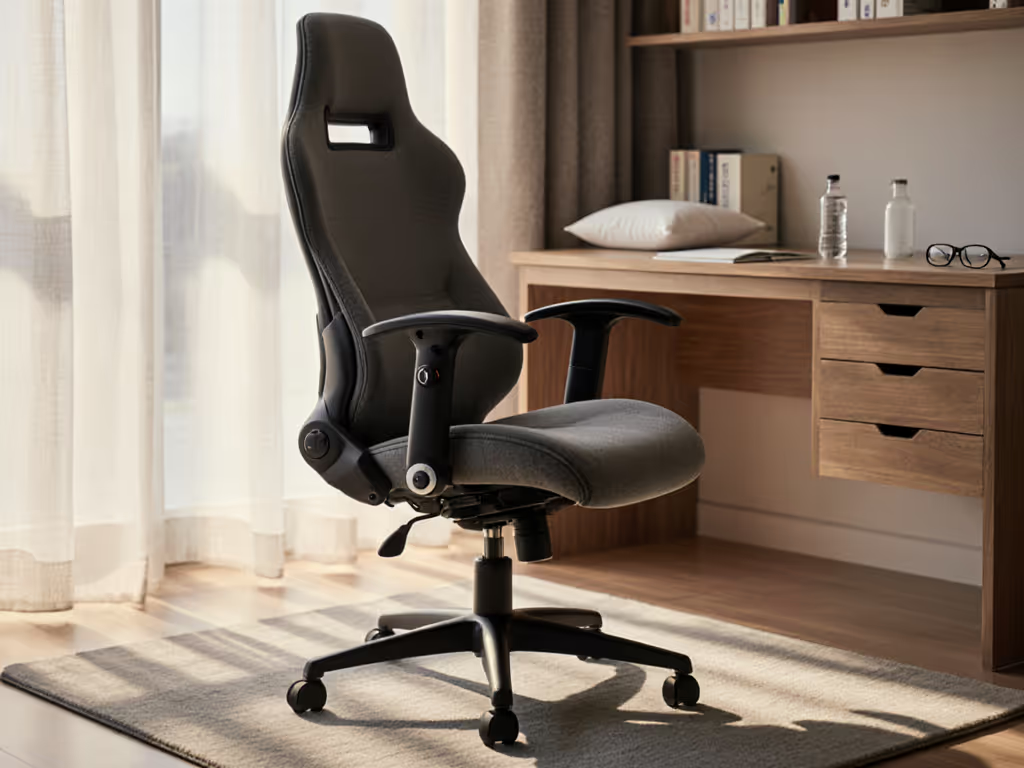
One of the most common misconceptions I encounter is that vestibular-friendly chairs must be completely rigid. In reality, the most effective dizziness office chair solutions incorporate carefully calibrated movement:
- Multi-directional stability: 5-point bases with wider stance than standard chairs
- Progressive tension control: Recline mechanisms that offer graded resistance
- Seat pan isolation: Independent seat movement that doesn't transfer to the backrest
- Non-reflective surfaces: Matte finishes that reduce visual motion cues
The key is predictability. When every interaction with your chair follows consistent physical laws without surprise movements, your vestibular system doesn't need to constantly compensate.
Motion Sensitivity Workplace Seating Considerations
For individuals with motion sensitivity, the "dynamic sitting" trend can be counterproductive. Instead of chairs that encourage frequent position changes through instability, effective motion sensitivity workplace seating provides:
- Adjustment precision: Fine-tuned controls that stay exactly where set
- Tactile feedback: Clear indicators of position changes without visual verification
- Controlled micro-movement: Within defined parameters that don't trigger vestibular responses
- Predictable return-to-neutral: Consistent posture reset without overshoot
Look for chairs with documented testing against ISO 7176-14 (wheelchair stability standards), which provides more rigorous stability metrics than standard office chair certifications. These audit trails give credibility to manufacturer claims about stability performance.
Evaluating Vertigo-Friendly Ergonomic Design
Beyond the "Stable Base" Marketing Claim
Marketing materials often tout "stable bases" for vertigo-friendly ergonomic design, but meaningful stability requires specific engineering:
| Feature | Standard Chair | Vestibular-Optimized Chair |
|---|---|---|
| Base Diameter | 24-27 inches | 28-32 inches |
| Caster Quality | Basic polyurethane | Precision bearings with stability dampers |
| Seat Tilt Mechanism | Free-floating | Progressive resistance with lockout |
| Visual Contrast | High-pattern fabrics | Consistent, low-contrast upholstery |
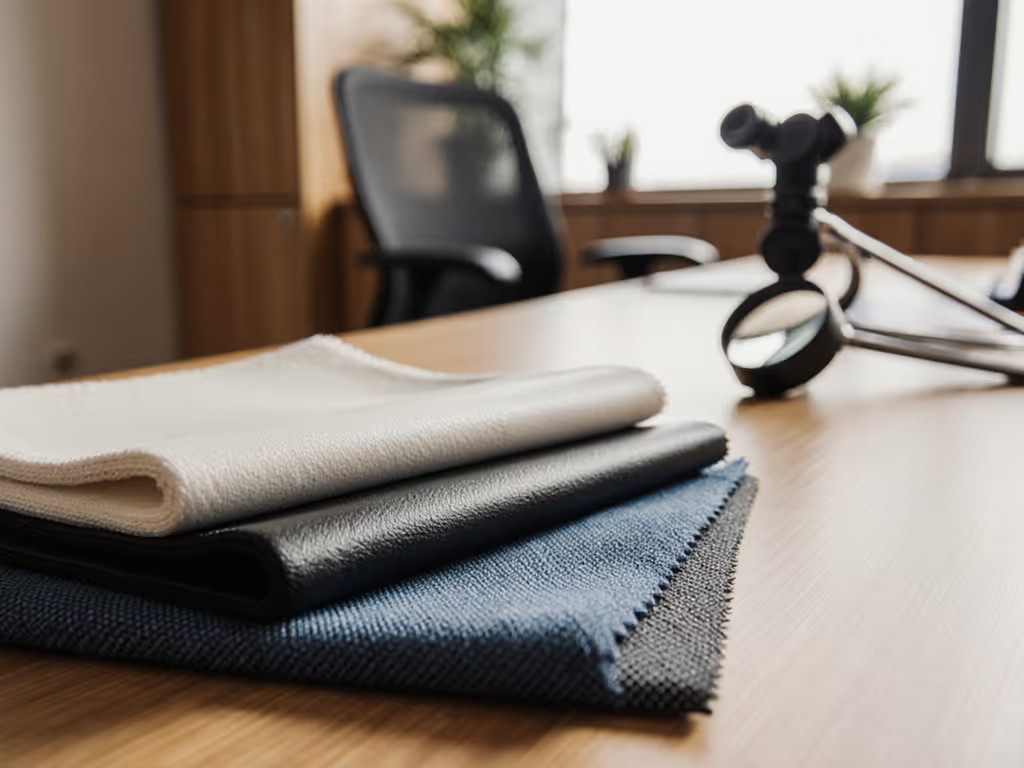
Many chairs claiming stability use wider bases but compensate with lighter materials that create new instability points. True stability engineering maintains weight distribution through the entire structure, not just the base footprint. This is where understanding material vocabulary becomes crucial, you need to understand whether "lightweight" means compromised stability or thoughtful weight distribution. To evaluate build choices that actually resist wobble, use our chair quality checklist for materials, mechanisms, and tolerances.
Certification and Testing You Can Trust
When evaluating chairs for vestibular needs, look beyond standard ANSI/BIFMA certification. Seek:
- ISO 15392:2016 compliance for stability testing under varied load conditions
- Third-party vestibular testing with documented user feedback from vestibular disorder communities
- Long-term stability testing showing performance after 50,000+ cycles
A chair that maintains its stability characteristics through years of use (not just when new) provides the consistent environment vestibular users require. This longevity directly impacts total cost includes time, as frequent replacements disrupt workflow and require relearning new adjustment mechanisms.
Sustainable Solutions for Long-Term Use
Why Repairability Matters for Vestibular Users
For vestibular disorder management, consistency is therapeutic. When a chair's components wear out or need adjustment, having access to replacement parts and service documentation becomes critical, not just convenient. Models with standardized fasteners and published service manuals allow technicians to maintain the precise stability settings you've calibrated for your needs.
I recently cataloged 70 chairs during a coworking space downsizing: which broke, which were rebuilt, which resold. The models with standard fasteners and published parts lists lived twice. Seeing them return to desks instead of dumpsters convinced me that sustainability isn't a colorway: it's a maintenance pathway you can actually walk. For vestibular users especially, this consistent maintenance pathway means avoiding the disorientation of switching to a new chair with different movement characteristics.
Total Cost Includes Time: The Vestibular Perspective
When calculating value for stable base office chairs, consider:
- Setup time: How long to achieve proper configuration
- Maintenance time: Frequency and complexity of adjustments
- Learning curve: Time needed to adapt to new movement characteristics
- Transition time: Productivity impact when replacing worn chairs
Buy once, maintain well, and the chair returns the favor. This isn't just about financial ROI, it is about preserving precious cognitive resources for your actual work rather than constantly managing seating discomfort.
Finding Your Optimal Balance Solution
Practical Implementation Steps
For those evaluating options, I recommend this evidence-led approach:
- Document your triggers: Note what specific movements or chair behaviors exacerbate symptoms
- Test stability parameters: Assess base resistance to lateral pressure, recline smoothness, and return-to-neutral consistency For how different recline systems behave under load, see synchro-tilt vs center-tilt tested for spinal support and smoothness.
- Verify service accessibility: Confirm parts availability and repair pathways before purchase
- Measure adjustment precision: Can you make micron-level changes that stay precisely where set?
- Evaluate total lifecycle cost: Factor in expected maintenance needs and parts replacement costs
The most sustainable comfort solutions acknowledge that your chair is part of a larger ecosystem, not just an isolated product. No greenwashing claims about "wellness" can substitute for actual engineering that supports your specific physiological needs through years of use.
total cost includes time (especially when that time represents cognitive resources diverted from your meaningful work to managing seating discomfort)
Further Exploration
For those seeking deeper understanding of vestibular-friendly seating, consider these resources:
- The Vestibular Disorders Association's Workplace Accommodations Toolkit
- ISO 15392:2016 stability testing methodology documentation
- Peer-reviewed studies on workplace modifications for vestibular disorders in the Journal of Vestibular Research
When evaluating chairs, request stability test data rather than relying on marketing claims. True vestibular-friendly design shows its evidence in engineering specifications, not just in aesthetic promises. Your long-term productivity and comfort depend on seating that provides consistent, predictable support through years of daily use (not just through the return window).
Related Articles