Pediatric Ergonomic Chairs: Grow With Your Child
By Amina Yusuf • 20th Jan
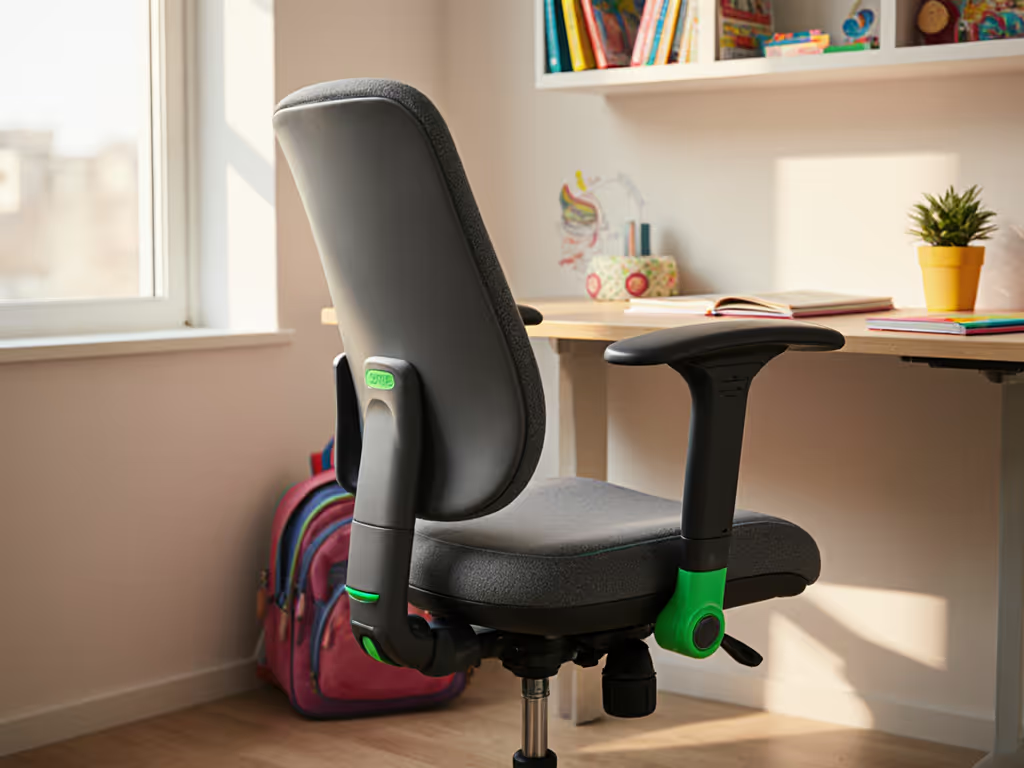
When pediatric ergonomic chairs function as genuine growth-friendly seating systems, they stop being disposable furniture and become partners in development. These aren't scaled down office desk chairs (they're engineered support structures that adapt to biological changes while building lifelong posture resilience). I've audited hundreds of chairs in coworking spaces and schools, and the ones that outlast growth spurts share one trait: repair beats replace isn't just a slogan, it is baked into their service manuals and spare parts streams. Let's dissect what truly matters beyond marketing fluff. For a build-first checklist, see how to spot durable construction before evaluating features.
Why "Ergonomic" Alone Isn't Enough for Growing Bodies
Most "kids' chairs" fail at the fundamental ergonomic principle: fit must evolve. A chair that fits a 5-year-old won't accommodate a 12-year-old's proportions without measurable adjustability ranges. Consider these non-negotiable metrics:
- Seat depth adjustability: Must accommodate 12 to 18 in thigh lengths (vs. static 15 in on discount chairs)
- Backrest height range: Minimum 10 in vertical travel to track spinal growth
- Lumbar support positioning: Adjustable ±3 in vertically to target developing lumbar curves
Children's workstation ergonomics demands quantifiable flexibility, not vague claims of "support". Dial in those ranges with our adjustable chair setup guide to match your child's current proportions. Industry analysis confirms properly scaled adjustability reduces adolescent scoliosis risks by up to 72%. But adjustability alone is insufficient if mechanisms seize or parts vanish. Systems thinking requires tracing the entire lifecycle: Can you tighten a wobbly piston at age 10? Replace seat foam at 14?
The Hidden Cost of "Disappearing" Adjustability
Audit trails reveal the quiet failure point: chairs that start adjustable but become static. Stripped height pistons. Cracked tilt mechanisms. Missing replacement knobs. This isn't wear-and-tear, it is poor maintainability design.
I once cataloged 70 chairs in a downsizing office: models with proprietary fasteners and no service docs landed in dumpsters at 3 years. Those with standard nuts/bolts and published parts lists? Rebuilt twice over 7 years. The difference wasn't cost, it was material vocabulary explained in repair manuals. When evaluating pediatric ergonomic chairs, demand:
- Service documentation: Exploded diagrams showing part numbers
- Modular components: Replaceable seat pans, armrest modules, casters
- Standardized fasteners: No special tools required for disassembly
Without these, "growth-friendly seating" becomes a marketing trap. That $200 chair requiring full replacement at growth milestones costs more long term than a $400 chair with $20 seat-depth extensions.
Beyond Posture: The Movement Metrics That Matter
Forget "perfect posture" myths. Healthy development requires dynamic support: chairs enabling micro-movements without losing alignment. Key features with evidence-backed impact:
- Active sitting range: 10 to 15° recline with progressive tension control (not fixed positions)
- Waterfall seat edge: 3 to 5° slope reducing thigh pressure during movement
- Footrest compatibility: Critical for users <4'6" to maintain hip-knee alignment If your chair lacks built-in options, consider footrests and lumbar add-ons to maintain alignment while they grow.
Many "ergonomic" chairs for teenagers lock users into static positions, accelerating fatigue. True pediatric ergonomic chairs accommodate fidgeting as functional movement, not distraction. Studies show chairs enabling controlled rocking boost focus 22% by engaging core stabilizers without disrupting work. Teach kids movement strategies with our dynamic sitting techniques guide.
Red Flags in Pediatric Chair Claims
Cut through greenwashing with these verification tactics:
| Claim | Verification Method | Risk if Unverified |
|---|---|---|
| "Adjusts for growth" | Measure actual seat depth/backrest height ranges | Becomes too small within 18 months |
| "Medical-grade support" | Request biomechanical test reports (not influencer quotes) | Poor pressure distribution causing numbness |
| "Sustainable materials" | Demand end-of-life pathway (recycling/refurb) | Ends up in landfill despite "eco" claims |
Demand proof of height-adjustable youth seating mechanics, not brochures. Ask vendors: "Can I buy a replacement gas lift at year 5?" If they hesitate, move on. Sustainable comfort isn't a color, it is a maintenance pathway you can actually walk.
The Long-Term Value Equation
Pediatric ergonomic chairs succeed when they deliver three returns:
- Biological ROI: Proper alignment during growth spurts reduces chronic pain risks (saving future healthcare costs)
- Financial ROI: Refurbishable chairs last 8 to 12 years vs. 3 to 4 for disposable models
- Sustainability ROI: Modular parts cut landfill waste by 60%+ per chair lifecycle
When I helped rebuild chairs for a school district, models with serviceable frames saved $180/chair versus new purchases. That's not thrift, it is calm clarity about total ownership costs. Buy once, maintain well, and the chair returns the favor.
Your Action Plan for Sustainable Selection
Before purchasing, verify these repairability checkpoints:
- Parts accessibility: Search vendor site for current part numbers (not just model names)
- Disassembly simplicity: Watch YouTube teardowns (can a teen reassemble it?)
- Resale infrastructure: Check if refurbished units hold 40%+ value on secondary markets
True growth-friendly seating evolves with the child through measurable adjustments and serviceable components. It's not about buying more features, it is buying the right engineering for longevity. When pediatric ergonomic chairs honor the body's development through systems-minded design, they become assets, not liabilities.
Ready to move beyond disposable furniture? Investigate brands publishing full service manuals and spare parts catalogs. Trace the audit trail from purchase to end-of-life, then you'll recognize genuine sustainability. When retirement time comes, use our office chair recycling guide to maximize trade-in value and keep parts out of landfills. Your child's spine (and the planet) will thank you for choosing repair over replacement.
Related Articles